

Wired vs wireless charging: What's the difference?
The conventional phone charger tethers the phone to the wall, limiting usage and movement while charging. A cordless charging system that can work like wifi or bluetooth is something most smartphone enthusiasts might have imagined. How cool can that be? Wireless chargers are a leap towards that direction and have actually improved the phone charging experience. In April 2015, the Samsung Galaxy S6 became the first smartphone to support wireless charging.
Wired chargers
If you're a smartphone user then you are aware that a wired charger is comprised of a charging adapter, that can be connected to a phone using a permanent or detachable cable. The connector cables have different pin designs depending with the smartphone. Latest smartphone cables use USB-C connectors which are a replacement for the good old USB micro A and B connectors. (Did you know that the USB micro connectors became the standard phone connectors in 2007, and the basis for a universal charging solution in 2009, which would result in the reduction of emission of Greenhouse gases by up to 21.8 million tonnes per year?)
How they work
A charging adapter typically reduces the power from the mains to a suitable wattage before supplying it to the smartphone. Most charging adapters comprise of a step-down transformer in their circuits whose job is to reduce the voltage to required levels for your smartphone. The circuits also have more components to smoothen the electrical flow and limit the electrical current as required.
Types of wired chargers
Different phone models have specific recommended chargers to ensure maximum battery life. Wired chargers can be grouped into fast chargers and normal chargers. Fast chargers are designed to feed the battery with more electrical energy in shorter periods of time. Some of the latest smartphones sport USB-C ports which are an improvement to USB micro ports. USB-C ports have rounded edges and usually get shipped with a USB-C PD fast charger. Some USB micro A and B ports also support fast charging hence if you are after quick charging speeds, wired chargers are the best option.
Pros of wired chargers
- Fastest charging method
- Easier to use a phone while charging
- More phones support wired charging
- Suitable for travelling
Cons of wired chargers
- USB ports can be damaged due to wear and tear
- Their usage is limited to approximately 10,000 cycles
Wireless chargers
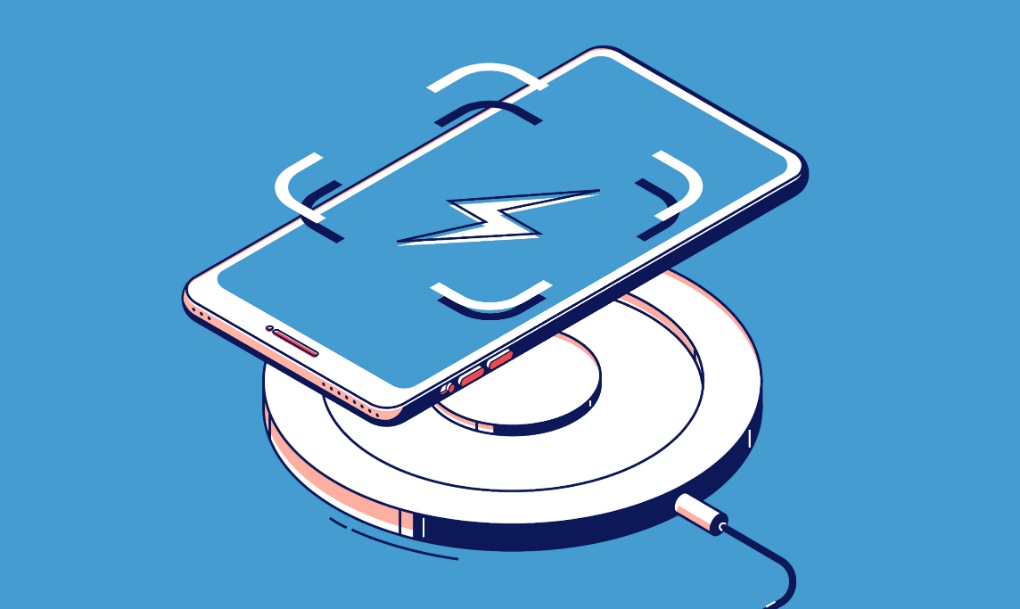
Wireless charging was once just a specialty feature but today it is a standard feature for flagship smartphones. The wireless charging system comprises of an adapter and a pad onto which the smartphone is placed. The phone must be in a very close proximity to the pad for electrical energy to be transferred. For phones that lack built-in wireless charging systems you can use wireless charging-capable cover cases. In some setups, wireless charging is slower than wired charging. There are various competing standards in the wireless charging domain, 'Qi' being the most popular and is used on the iPhone 8 and iPhone X models.
How they work
Depending with the type of wireless charger, the system works by transferring electrical energy to a receiver inside the back panel of a smartphone.
Types of wireless chargers
There are three types of wireless chargers, they are radio, inductive and resonance chargers. Radio chargers have a transmitter connected to the mains that emits radio waves which can be detected and used to generate current to charge a battery. Inductive chargers are the most commonly used type which work by transferring energy from the charger to a receiver on the phone using electromagnetic induction. Resonance chargers are not yet applicable for smartphone charging since they are used to supply greater amounts of power.
Pros of wireless chargers
- Very convenient and easy to use
- Very minimal damage caused by wear and tear
Cons of wireless chargers
- Slow chargers
- Prone to causing overheating of phones
- Slightly expensive than wired chargers
- Cannot work through some metalic or thick cases
Verdict
Both wired and wireless chargers have evolved to have better performance statistics. The decision for choosing either mainly depends on their applications. For instance a wireless car-mountable charger is more suitable for vehicular usage but a wired charger is the best option when fast charging is required. Since phones capable of wireless charging normally come with charging ports too, both systems are best used alternatively by utilising each type's advantages in a given use case.


Comments
Post your comments